Airbus A330-300
A330 family · First flight 1992 · Superseded by A330-900neo
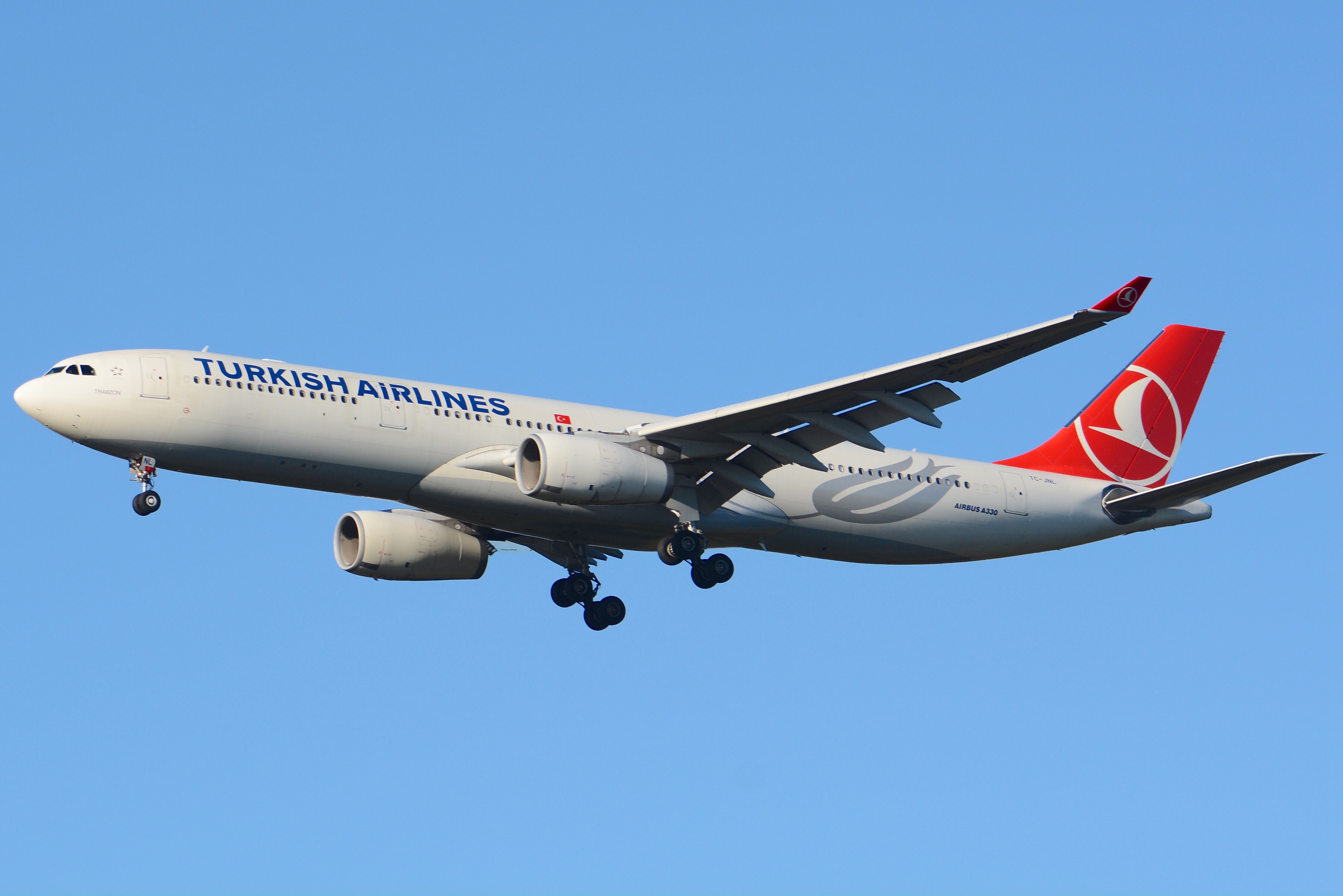
The Airbus A330-300 is the stretched twin-engine variant of the A330 family and Airbus's workhorse widebody for most of the 2000s and 2010s. It entered service with Air Inter in 1994 and became a standard aircraft for European flag carriers on transatlantic and Middle Eastern routes. The A330-300 seats 277 to 335 passengers in typical configurations and has a range of around 6,350 nautical miles. The aircraft offered an attractive operating cost per seat on medium-to-long-haul routes, particularly for airlines that did not need the range of a 777 or the capacity of a 747. The A330-900neo has since taken over the production line, but the ceo A330-300 remains in service with hundreds of aircraft worldwide. Turkish Airlines, Cathay Pacific, Qantas, and Delta all operated large A330-300 fleets at various times.
Specifications
- First flight
- 1992
- Entered service
- 1994
- Status
- Superseded by A330-900neo
- Typical capacity
- 277 to 335
- Range
- 6,350 nautical miles (11,750 km)
- Cruise speed
- Mach 0.82 (541 mph, 871 km/h)
- Length
- 63.66 m (208 ft 10 in)
- Wingspan
- 60.3 m (197 ft 10 in)
- Engines
- Two General Electric CF6, Pratt & Whitney PW4000, or Rolls-Royce Trent 700 turbofans
Major operators
- Turkish Airlines
- Cathay Pacific
- Qantas
- Delta Air Lines
- Air Asia X
Related
Think you can identify aircraft in flight?
SkyQ is a daily puzzle game where you guess real flight routes from aircraft type, airline, and other clues.
Play today's puzzle